Delightful Davao
February 4, 2014 § Leave a comment
 Credits: Paper from the “Chronicling Life” kit of Haynay Designs

Davao. Home to some of the country’s pride— the world’s largest bird, the monkey-eating Philippine Eagle and a rare orchid of exceptional beauty, the waling-waling— both found in Mt. Apo, Philippine’s highest peak. But there is more to Davao than these. Let’s not forget the “king of fruits”, durian. The area is known to be the center of durian production, thanks to its rich fertile volcanic soil and until recently, typhoon-free area. But more than durian, Davao is favored with other fresh, quality produce and fruits that are available all year round— pomelo, banana, mangosteen, lanzones, rambutan, mongo, peanuts, cabbage eggplant… among others.
The city is a fascinating mix of small town allure and modern metropolis refinement. A metropolis inhabited by 1.4M people of different ethnic groups, culture and faiths. The city teems with good food and on my not so very recent trip there, I discovered a few worth mentioning.
Swiss Deli
Along JP Laurel Ave., in Lanang is a deli and restaurant offering fine sausages, cured meats like bacon and hams, a selection of cheese, US and Australian steak cuts and even ostrich meats. Owned by a butcher and a baker, Swiss Deli has been around since 2005 catering at first to expats and Davao’s upper crust. Today, they supply some of the bigger supermarkets nationwide. On my visit, the restaurant was packed for lunch.
 My superb lunch of Chicken Cordon Blue and a shared sausage platter.

Claude’s Le Café de Ville

We drove into a driveway of a well-lit ancestral house. The garden well polished, the interior emulates the facade with old photos gracing the walls and well-appointed antique pieces scattered around.

My favorite part of the house would be the porch— what a wonderful way to be greeted.

This house epitomizes old world elegance through and through. An ancestral home of the Oboza family (also called the Oboza Heritage House) now dwells the only full-service French restaurant in Davao, Claude’s Le Café de Ville.
Complementing its charming home are wonderful dishes served from its kitchen headed by husband and wife team Claude and Tess Le Niendre. I had the Crab Cocktail to start and the specialty of the house, the Fillet of Beef Tenderloin with Pepper Sauce.

The crab appetizer was excellent, and my main, albeit a bit overcooked for my taste (it was more medium well than my preferred medium), was tasty and still juicy.
A pretty authentic French restaurant in Davao was definitely a pleasant surprise.
Malagos Farmhouse Artisan Cheeses

Davao surprises me, I tell ya. After an evening of wonderful French feasting, we were on our way, the next day, to buy artisan cheese. This wasn’t the first time I had tried cheeses from Malagos and so impressed I was, I had to find them and see what else they had to offer.

Olive Puentespina, the woman behind Malagos Artisan Cheeses, has been producing cheeses since 2006. All made from hybrid cows and goats from their dairy farm.

A cheese spread was laid out for us to try over at the farmhouse—from quesong puti, to flavored chevres, to manchego blue—an unbelievable spread, all proudly made in Davao.

Personal favorites are: Queso Rustico (semi-soft cow’s milk similar to a manchego), Blush (Queso Rustico with a tint of blue), La Maria (similar to a camembert), Feta tricolor (feta with chili and rosemary, infused fresh), and the Chevre with mango (a blend of creamy French style goat cheese with sweet mango bits).
 My Take-Home Stash

Spirale Ristorante

For wonderful pasta and pizza, Spirale Ristorante will not disappoint. Thumbs up for the Vongole ai Chorizo (a wonderful combination, don’t you think?) and the pizza, which is cooked in a wood-fire oven. Crust was doughy yet crispy.
Chicco di Caffe

For their Durian Brazo di Mercedes. Yum!!! Anything durian is possible in Davao. I had my first taste of durian in an ice cream in Davao some 20 years ago and I’ve never looked back. I. Adore. Durian.
Swiss Deli JP Laurel Ave., Lanang, Davo City +6382 234 0271 Claude’s Cafe de Ville 29 Rizal St., Paseo de Habana, Davao City +6382 305 2635 / +6382 222 4287 Malagos Farmhouse Bolcan St., Agdao, Davao City +6382 226 4446 Spirale Ristorante Damaso Complex Angliongto Road, Lanang, Davao City +6382 234 6298 Chicco di Caffe Gen. Douglas MacArthur Hwy, Davao City +6382 305 3534 Faura St., Davao CityDevastations and Tarte Tatins
December 2, 2013 § Leave a comment
Last month was a month of total devastation in my part of the world, devastation that is unexpected by many, me included. The most powerful tropical cyclone of the year hit our shores on November 8. Super typhoon Haiyan, locally known as Yolanda, smashed into most of the Visayas and some parts of Luzon in central Philippines, affecting more than 10 million people.

Survivors stand among debris and ruins of houses destroyed after Super Typhoon Haiyan battered Tacloban city in central Philippines November 10, 2013. Credits: Reuter: Erik de Castro
With winds that clocked in at average strength of 196 mph (314 kph), Yolanda’s rampage left a city and many islands in ruins, a population with no homes, and countless bodies still being found almost a month after.
I am writing this in the safety of my home, 850km away from the disaster zone. I shuddered at the thought of what it would have been like if it had hit the metropolis and I count my blessings. I do my best to help in every little way I can – donations, feeding the volunteers, and eventually feeding the survivors that found their way to Manila. Not enough, if you ask me, but what is enough?
This turn of events has left me heavy-hearted and shaken, and I turned to one thing that always calms me. I baked.

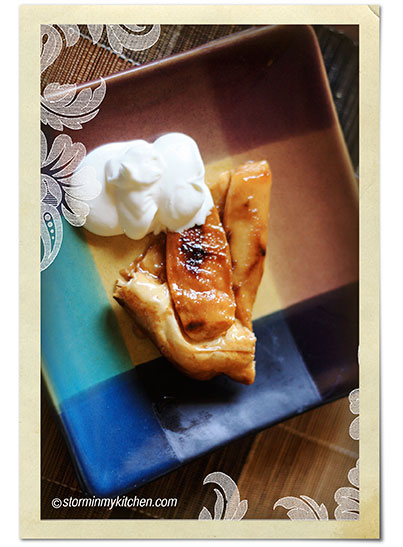
I’ve always wanted to make Tarte Tatins – a killer sticky sweet caramel-topped French treat that was originally made with apples. Many, through the years, have twisted the recipes to use different fruits – pears, bananas, peaches, pineapple – I chose to use guavas. Guavas are heavenly when preserved in sugar.
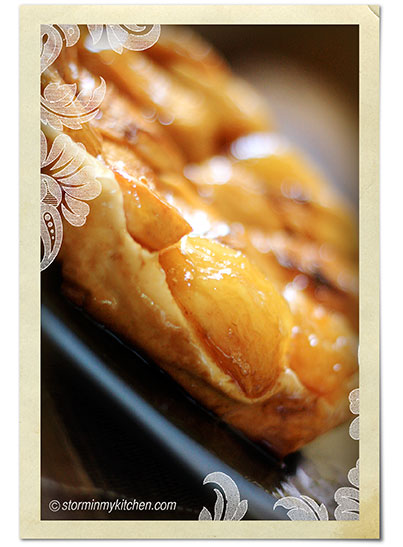
It is one of the easiest to make but likewise one of the hardest. This tart is made upside down by cooking the fruit in butter and sugar in a heavy-based oven-proof skillet, then topped with pastry before baking. That’s the easy part. The hard part is flipping the tart (down side up) without making a mess and burning oneself.

I used two large guavas, which, I think could use more. So depending on the size of the guavas, you may choose to use three large guavas.
Guava Tarte Tatin
(recipe adapted from Deb of Smitten Kitchen)What You Need:
- 2-3 large Guavas (I used Apple Guavas)
- Juice of half a lemon
- 6 tablespoons (85 grams) butter
- 1 1/3 cup (266 grams) sugar, divided
- Puffed pastry, chilled
- A 9-inch ovenproof skillet, heavy enough that you fear dropping it on your toes
What You Do:
- Peel guavas, cut lengthwise into quarters and core (you don’t want the seeds). Then cut a bevel along their inner edge, which will help their curved exteriors stay on top as they rest on this edge.
- Toss guavas with the lemon juice and 1/3 cup of the sugar. Set aside for 15 minutes to help release the guava’s juices.
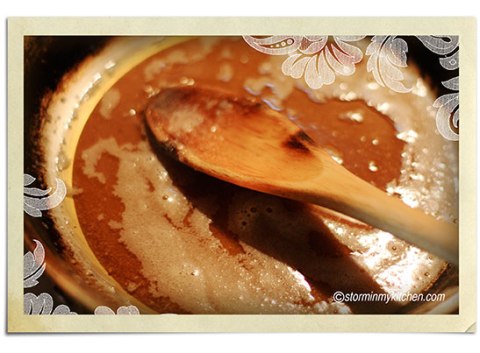
- Melt butter in an oven-proofed skillet over medium heat. Sprinkle in remaining (1 cup) sugar and whisk it over the heat until it becomes a pale caramel color.
- Off the heat, add the guavas to the skillet, arranging them rounded sides down in one layer. Lay any more guava wedges left rounded sides down in a second layer, starting from the center.
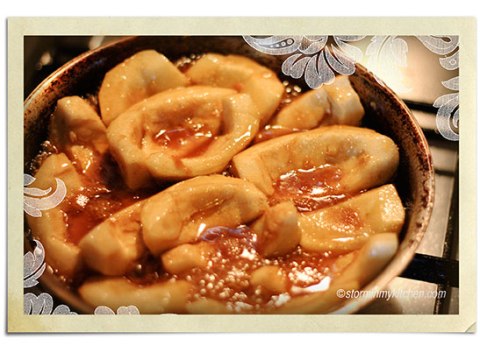
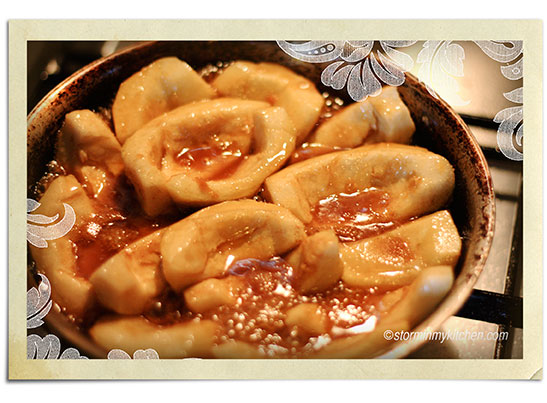
- Return the pan to the stove and cook in the caramel for another 20 to 25 minutes over moderately high heat. With a spoon, regularly press down on the guavas and baste them with the caramel juices from the pan. If it seems that your guavas in the center are cooking faster, rotate guavas. The guavas will shrink a bit by the end of the cooking time.
- Preheat oven to 200°C (400°F). Roll out your puffed pastry to a 9-inch circle and trim if needed. Cut four vents in pastry. Remove skillet from heat again, and arrange pastry over guavas. Tuck it in around the guavas for nicer edges later. Bake until the pastry is puffed and golden brown, about 20 minutes.
- Once baked, use potholders to place a plate or serving dish (larger in diameter than the pan) over the pasty and tip over the pastry and guavas at once onto the plate. If any guavas remain in the pan, nudge them out with a spatula.
- Serve warm with a dollop of whipped crème fraîche, or lightly sweetened whipped cream.

Tips:
- Try other variations: bananas, pears, apples (of course) — although I haven’t tried making any of these yet.
- If you don’t have an oven-proofed pan, cook the fruit in a heavy based frying pan, then transfer them into a similar sized pie dish and top with pastry before baking.
- You can cook this one day ahead, keep it in the mold and reheat in a preheated oven at 150°C for 20 minutes but it is best 1 hour after cooking when still warm.
Hong Kong Nightlife: Knutsford Terraces
October 28, 2013 § 2 Comments
High-rise buildings, temples, shopping malls, and traditional markets sit side by side in hilly terrain. Once home to fishermen and farmers, the Hong Kong of today is teeming with a dynamic metropolis fused with Chinese and Western influences.

A lively range of restaurants, eateries, pubs and bars are mostly found in east Tsim Sha Tsui, Wanchai, and Lan Kwai Fong, the latter touted as the icon of the city’s vibrant nightlife that consist of tourists, expat and an overseas Chinese community. For an engaging mix of locals and outsiders, and mid-priced eats, however, the bustling Tsim Sha Tsui neighborhood may be a better bet.
Wandering about in Nathan Road, we turned into Kimberly Road. The flight of steps, next to the Ben and Jerry’s ice cream shop, revealed a pedestrian strip of al fresco restaurants and bars, and multi-story building housing more selections of eats.

An exciting mix of restaurants, bars and clubs that span the globe, Knutsford Terraces is, in some measure, the “Lan Kwai Fong” of Kowloon. Smaller and less frenetic, fascinated by the varied selections, we thought it was worth probing into. And so we found ourselves back the following night.
Eyeballing each menu on the strip, and always on the look out for fresh oysters, we walked into Island Seafood and Oyster Bar.

With most establishments reasonably priced, this joint was way off our budget. Not to read this wrong, for Hong Kong standards, the oysters we had were probably worth the price, but coming from a country teeming with fresh seafood, it was good to try but not safe to linger… not safe for the pocket, at least.
And so we moved on. Tutto Bene’s pastas, one of the oldest restaurants on the strip, won over Widlfire’s thin crusted, wood-fire oven baked pizza. Seated at the outdoor patio, we were served bread with a lovely spread set of roasted garlic, pesto, and a tomato-based cream cheese. Both our dishes were excellent with us switching plates mid-way.

The Riso con Capisanto alla Griglia is perfectly cooked Arborio rice with shiitake, portobello and porcini mushrooms and topped with grilled scallops and shiitake fritters – a mouthful of wonderful flavors of earthy mushrooms and sweet scallops.

The eggplant and mozzarella filled ravioli, on the other hand, worked remarkably well with the pesto, roasted walnut and arugula – a play on sweet, slightly bitter and slightly peppery flavors.

We capped the evening meal with fantastic limoncello, so good we asked to see the bottle.
The following evening, we stayed indoors (partly because it was drizzling on and off) and found The Tasting Room Cocktail Kitchen at the Miramar Shopping mall.

Dark interior, small tables, a large TV screen… not exactly very inviting but what caught Anton’s fancy was the beer combo – a set of four beers arranged in drinking order (as explained by the wait staff).

The choices, Hoegaarden, Budvar, Asahi, were different enough to call for this pick. What hit my spot, truth to tell, was the Dinner Tasting Sets.
 Clockwise: French Mussels, Winter Black Truffle and Pig Knuckles stuffed in tomato and glazed in beef jus, Foie Gras on toast, 36 months Iberico Ham and figs

We chose the Eight Course Winter Tasting Set (to share), which comes with a max of 6 oysters at half the price.
 Left to Right: Dessert, Chanterelle and Tenderloin, Thin Asparagus pizza

Suffice to say that we were happy campers that evening. If it weren’t raining, the best place to sit is out back, overlooking the terrace strip.
If staying within the neighborhood, Knutsford Terrace is a good choice to be. With the many restaurants still unexplored, a return on my next trip to Hong Kong is not far-fetched.
Island Seafood & Oyster Bar 10 Knutsford Terrace, Tsim Sha Tsui, Kowloon For Reservation: +852-2321-6663 Tutto Bene 7 Knutsford Terrace, Tsim Sha Tsui, Kowloon For Reservations: +852-2316-2118 The Tasting Room Shop 2015 Mirarmar Shopping Center 132 Nathan Road, Tsim Sha Tsui Knutsford Terrace N01-10 For Reservations: +852-2473-0168Chicken Larp (Laotian Chicken Salad)
September 18, 2013 § 2 Comments
My aunt’s kaffir lime tree bore fruits, but she usually lets them fall off because she only uses the leaves, she told me.

Thoughts of Thailand and Laos, most especially, burned in my mind, reminding me of the various dishes flavored with this heavenly lime.

I spent a day learning Lao cooking at the Tamnak Lao Restaurant in Luang Prabang 2 years ago. Fun experience, but I haven’t had many chances of making the recipes at home because kaffir lime is usually needed and is often hard to come by.

Sure I could use lemon or calamansi… but kaffir has a distinct strong tangy flavor that can brighten up a dish.
“I could use some of those limes”, I told my aunt, suddenly missing the taste of larp. She sent me some and threw in some leaves too. Thank you Tita V.
Now I understand why she doesn’t use the fruit, most were dry. So dry, I had to use a few for this recipe.

But it was worth it. I was back in Luang Prabang, in a sidewalk café having my larp with ice-cold Lao beer, the Mekong on one side and Indo-Chinese residences on the other.
This is why I cook.
Chicken Larp

A very traditional Lao cold salad that can be substituted with pork, beef, fish and even tofu.
What You’ll Need
- 200 gram minced chicken, skin off
- 2 tablespoon banana flower finely sliced, rinsed well in water and drained.
- 2 kaffir lime leaves, thinly sliced
- 1 shallot, thinly sliced
- 2 garlic cloves, finely sliced
- 1 bunch of coriander, cut up finely green part only
- 2 stalks lemon grass, thinly sliced white part only
- 6 large rocket arugula, thinly sliced
- ½ teaspoon salt
- 1 tablespoon rice powder*
- 1 teaspoon chili powder
- ¼ teaspoon fish sauce
- 1 tablespoon fried garlic**
- 1 tablespoon fried shallots**
- 1 medium lime or lemon, juiced
- 2 tablespoons chicken or pork stock
What You do
- Put the pork or chicken stock, minced chicken, and half of the lime juice in a wok.
- Place over low heat and keep stirring until the chicken is cooked through and the stock is reduced.
- Transfer chicken in a bowl.
- Add the banana flower, kaffir lime leaves, shallots, garlic, coriander, lemongrass, and arugula leaves. Mix well.
- Add salt, rice powder, chili powder, fish sauce, fried garlic, and fried shallots. Mix thoroughly.
- Pour rest of the lime juice over the salad and give it a quick stir through.

Tips:
* Make your own rice powder by dry-frying raw sticky rice until it just begins to turn golden. Then whiz in a blender until powdery. Store in airtight container.
** If you can’t find fried garlic and shallots, make your own by slicing shallots / garlic very finely and deep-fry them until they turn golden. Store in airtight container.
Macau Eats
August 28, 2013 § 2 Comments
 Credits: Paper by Haynay Designs from the Scrapmatters’ Life Little Surprises kit

On board the TurboJet catamaran en route to Macau, I mentally planned our next few days in a city best known today as a high-rolling-casino-lover’s haven. Not by any means my cup of tea, but there is more to this glitzy casino city than just the sin and the bling. Although heavily dependent on gambling, Macau’s real attraction (in my opinion) has always been the food. As an ex-Portuguese colony, Macau has married Asian and Mediterranean in its culture, architecture and even in its cuisine.
 The Grand Lisboa

The flavors of Portugal intermingled with the Chinese and strongly influenced by the Southeast Asians, Africans, and South Americans has brought out a real fusion between East and West and has evolved to what is known today as Macanese cuisine. The result is earthy and rich in texture, flavor, and aroma.
Macanese food aside, the presence of raved about, quality establishments worthy of a Michelin star or two scatter around this peninsula making Macau a dining spectacle it is today.
First off our agenda: Dim sum
 Roasted Mushroom topped with goose liver pate

On the 2nd floor of the east wing of Hotel Lisboa is Portas do Sol. Contrary to its name, it is a “typical” Chinese restaurant, well-lit with a lively atmosphere, serving dim sum dishes as well as Chinese haute cuisine with season specialties. The extensive dim sum list reveals familiar and unfamiliar but exciting dishes. Mostly from the Chef’s recommendation, the dishes we chose were as ambrosial as its presentation.
 Clockwise: Steamed rice flour with preserved vegetables and barbecued pork, Steamed river shrimp dumplings flavored with basil, Deep fried wonton in sweet and sour sauce, Deep fried spare ribs with garlic and honey sauce, Deep fried diced garoupa in mustard sauce

Margaret

Then we walked down the street to a small alley. Tucked away in that alley is a small café selling the much talked about egg tarts. Creamy custard centers, slightly burnt caramel, buttery flaky crust – no wonder Margaret’s Cafe e Nata has queues any day of the week… well except Wednesdays, which was when we first found this hole-in-the-wall, darn! I found myself walking the same route from Hotel Lisboa the next day. I walked down Avenida Infante D. Henrique, passed the Grand Lisboa, crossed Avenida de Joao IV and veered right on that street until I saw a small (Margaret’s Café) sign pointing into an alley. I followed that sign and joined the others in the queue and in less than 30 minutes, I was skipping my way back to the hotel with four pieces of exquisite Portuguese egg tarts to be devoured at the comfort of our room with some leftovers, which held up well for breakfast the next day.

A Crossover from Hong Kong
This upscale restaurant has branches in Hong Kong, Macau and Shanghai. Chef and owner Tao Hwa Yan, once an apprentice to a legendary Cantonese Chef, Master Lee Choi, opened Tim’s Kitchen in a quiet street in Sheung Wan, Hong Kong in 2000. Bringing with him the techniques he learned with the master, the restaurant started as an on-site private dining serving traditional Cantonese cuisine. In 2007, Stanley Ho invited him to open a branch in Hotel Lisboa in Macau. With both HK and Macau branches currently given a Michelin star, Tim’s is not cheap but worth a visit.

The waiters know their menu, and although we failed to order their (pre-ordered) signature dishes, the recommended succulent baked pigeon with preserved veggies wrapped in lotus leaves had us licking our fingers.

Other just as good dishes recommended to us were: Sautéed scallops with fungus and chives with XO sauce, Fried rice with minced beef, onions and shallots, and Pan fried pork pie with salted fish.
Antonio
Trade in the gilded casino floor at the Venetian for a quaint cobblestone lane lined with Portuguese styled pastel townhouses in Old Taipa Village. In one of these houses, at the corner of Rua dos Clerigos is Antonio.

Not easy to find, we wandered around way before lunch hoping to get a table. And in a small Alley, we chanced on some Filipino restaurant staff who happened to be taking their breaks from THE Antonio’s kitchen. With their help, we managed to get ourselves a table. Antonio Coelho has been preparing authentic Portuguese food in Macau since he relocated in 1997.

Arroz de Pato – shredded duck, rice, and preserved sausage baked into a flavorful, aromatic dish. A signature dish not to be missed.
 From Left: Clams in white wine and olive oil, Pork Tenderloin steak, Portuguese style served with fried egg, a pitcher of Sangria.

Following the hearty meal, we wandered around the old village.

In a corner, near the Pak Tai Temple, we see a line forming but much as we would love to try Tai Lei Loi Kei’s famous Pork Chop bun, dessert appeals more than the bun. This will have to wait. So we walked back to Antonio to where he opened a café across.

We found our corner and ordered 2 amazing desserts to die for.

The Serradura is as velvety as this one and the orange roll is a perfect combination of moist cake, orange liqueur and caramel. Did I say to die for?
Portas do Sol 2/F East wing of Hotel Lisboa, Avenida de Lisboa, Macau For reservations call: (853) 8803-3100 Margaret’s Café e Nata Edificio Kam Loi Rua Almirante Costa Cabral, Macau Tim’s Kitchen Lobby Level East wing of Hotel Lisboa Avenida de Lisboa, Macau For reservations call: (853) 8803-3682 Antonio Rua dos Clerigos No. 7 Old Taipa Village, Macau For reservations call: (853) 2899-9998Wild Rice Shoots
August 2, 2013 § Leave a comment
I first had it at my mom’s. Succulent, crisp strips similar in texture to bamboo shoot but less fibrous. It assimilated well with the heat of the chili bean paste and the savory taste of oyster sauce.
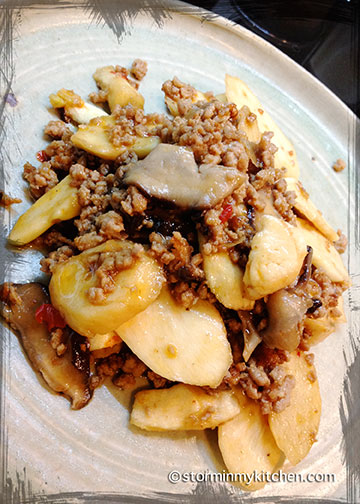
It became an instant favorite, thanks to the lady at Wei Wang, the neighborhood oriental store my mom frequents, for recommending this bamboo shoot looking vegetable to her complete with instructions on how to cook it. She said it was a kind of shoot called “kuw-sun”.
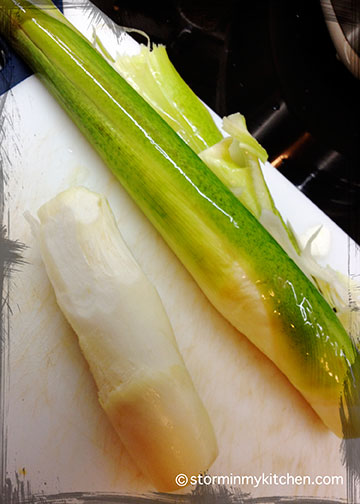
I later find out that “kuw-sun” is also called Wild Rice Shoots, an aquatic plant widely used in China and Japan which, when stripped of its husk, reveals a smooth, very pale inside. Rich in vitamins A and C, calcium, iron and other minerals, it is sliced and eaten raw or cooked, usually prepared by stir-frying with thinly sliced pork.
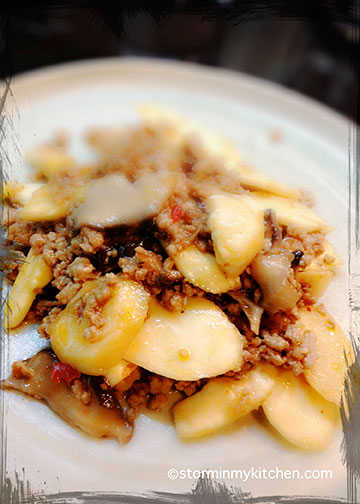
Chili Wild Rice Shoots with Pork and Mushrooms
What You’ll Need
- 2 stalks of wild rice shoots, outer layer removed, and cut into strips
- 4-5 shiitake mushrooms cut into strips
- 100-150g minced pork
- 1 tablespoon Chili Bean Paste
- 1 tablespoon Premium Oyster Sauce
- 1 tablespoon Sugar
- ¼ cup water
- 2 tablespoon Vegetable oil
- Sesame oil for drizzling
What You Do
- In a small bowl, mix together chili bean paste, oyster sauce, sugar and water. Set aside.
- Heat up a wok until smoky and add oil. Bring temperature down to medium high
- Add the pork, stir-fry until brown then add the mushrooms. Cook for seconds before adding the wild rice shoots. Toss around until the shoots are slightly brown.

- Add the chili mixture and toss until well coated.
- Drizzle with a good quality sesame oil before serving.

A dish packed with flavor and so easy to prepare.
Taste of Hida
July 26, 2013 § 3 Comments
It’s been over six months since our Takayama trip. So much has happened since then.

But when I close my eyes, I still see the foliage, still feel the autumn breeze on my face, still taste the beef that melts in the mouth, the savoury sweetness of miso that we’ve come to know so well. Oh to reminisce.
One of the many highlights of our trip to Hida is the eating. Located high in the Hida Mountains in the Gifu Prefecture, Takayama was kept fairly isolated during the old days allowing it to develop its own culture. Land-locked, they depend a lot on mountains and rivers for ingredients, taking inspiration but veering away from the cuisines of Tokyo or Kyoto.

If you’re looking for quaint towns, a wealth of excellent street foods and sake, a unique way of enjoying miso dishes, and different melt in you mouth beef dishes, then you must go to Takayama.
Along with their carpentry, lacquerware, and pottery works, Takayama is likewise known for its local cuisine. I truly enjoyed the food in Hida.
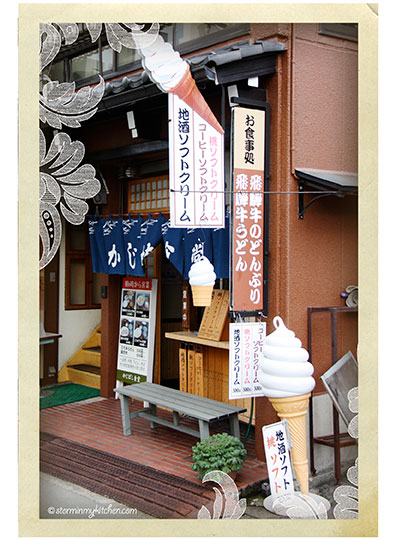
There were small shops, and stalls of food, from their famous dango balls to soft serve green tea ice creams everywhere we went.

And the mochi. Oh the mochi.
One of the popular street foods, in this part of Japan, is Mitarashi Dango, little mochi (sweet dumplings made of rice flour) balls on bamboo skewers, dipped in a mixture of dashi, mirin, and soy sauce then grilled.
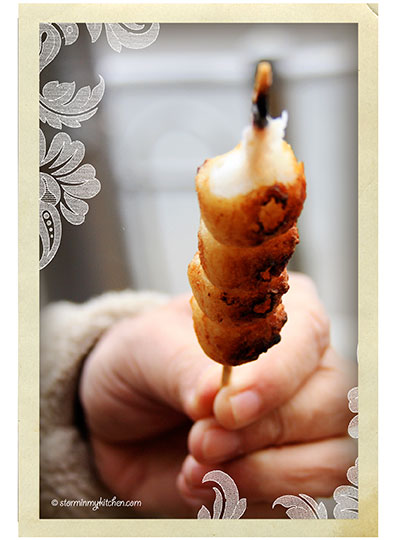
The chewy dumplings glazed with the sweet soy mix lets out a slightly burnt fragrance that is addicting, tempting me at every corner.
The unique combination of Hida’s landscape and climate produces excellent buckwheat and local soba noodle shops are all over Hida using the buckwheat flour to make their noodles. Locals love their soba paired with sake.
 Zaru Soba with edible wild plants

These handmade noodles are served hot in miso broth, a favorite during winter or cold (zaru soba) dipped in a light soy broth during summer time – hot or cold, the earthy flavor and the firmness of the noodles always shines through.
And the beef. Holding its own against Kobe and Matsuzaka is the pride of Takayama.

We tried it in various ways, and I can’t emphasize enough how satisfying those meals were.
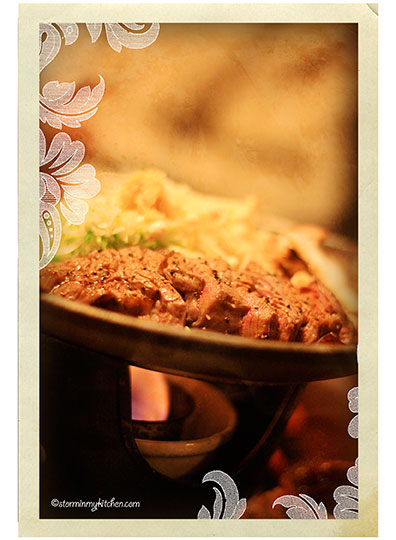
One distinctly local and considered Hida’s specialty is Hida beef cooked with another of Hida’s specialty, Hoba Miso. A plate of sliced raw beef is cooked at the table. On a ceramic brazier a hoba (magnolia) leaf topped with Hida’s special miso, the beef cooked over it. The miso added another layer of subtle fermented bean flavor. But what doesn’t go well with miso anyway?
This special miso is one thing I bought to take home with me.
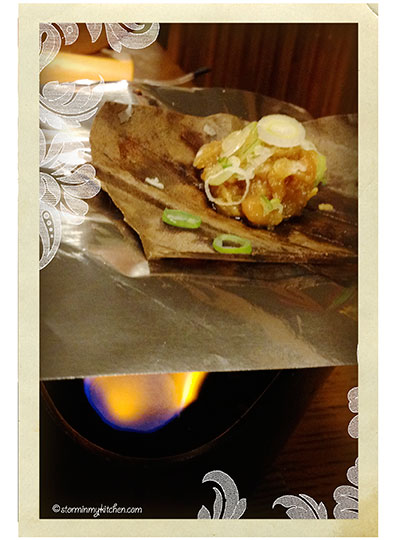
Savory miso paste mixed with leeks, shiitake mushrooms, and pickles placed on dried hoba leaf then heated over a charcoal fire – simply divine over plain rice.
Missing Spain
July 21, 2013 § 1 Comment
I’ve been remiss, forgive me. This is the real world catching up with me here. It’s been a busy few months since I got back from a month-long trip that started in Casablanca and ended in Madrid with Lisbon, among other cities, in between. And now I am missing the flavors of Spain.
 Granada
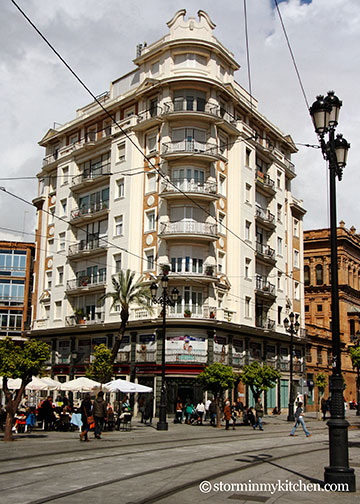 Seville
Spain. A country of soaring mountains, beautiful cities, towns and villages, outstanding art and architectures, and a diverse cuisine left by the Moors, Romans and the Greeks.
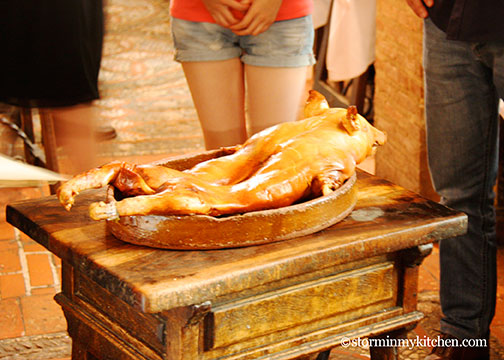
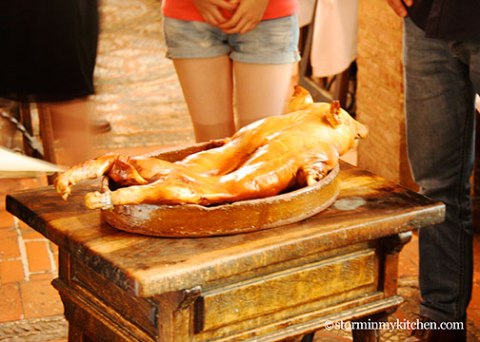 Cochinillo before the chopping ritual
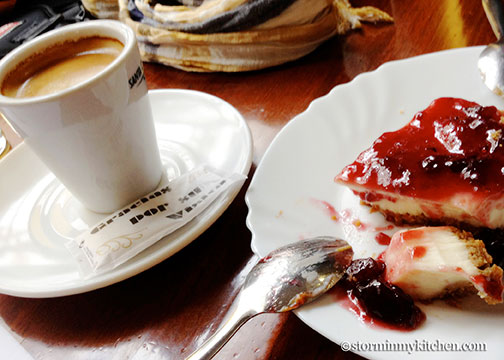
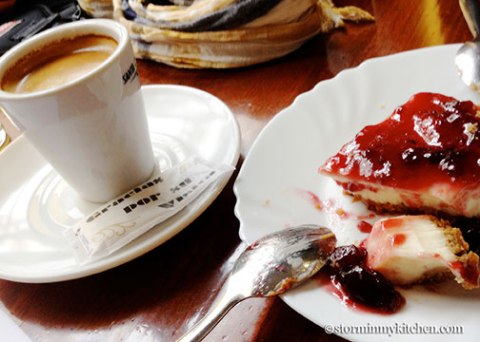 Coffee and dessert in a coffee shop in Ronda
Although very familiar to me, its cuisine still managed to leave a lasting impression. One dish that persists three months after our pleasurable acquaintance is Salmorejo, a variation of one of Andalusia’s famous dish, Gazpacho. A close cousin, if you will.
Like gazpacho, it is a cold tomato soup, only thicker. While gazpacho has tomatoes, cucumber, green pepper and onion, the vegetable present in Salmorejo is only tomato, and it uses garlic, not onions. Not as popular as gazpacho outside of Cordoba, where this soup originated, it has lately been gaining more recognition in and outside of Spain. Both are excellent summertime dishes, great as a starter or a light meal.

Usually served with hardboiled eggs and Spanish ham (Jamon Serrano or Iberico), I opted for the lighter accompaniment of green grapes and almond, a garnish borrowed from another cold soup, Ajo Blanco.
Salmorejo
Adapted from Food And Wine June 2013 Issue
What You Need:
- 1 kilo tomatoes
- 1 ½ cups white bread or baguette, crust removed and cubed
- 1-2 cloves of garlic, grated
- 1 tbsp. sherry vinegar (I used apple cider vinegar)
- ¼ cup olive oil, plus more for drizzling
- salt
Garnish:
- a few seedless green grapes, thinly sliced
- 1 tbsp. roasted almonds, chopped
What You Do:
- Scald the tomatoes: Bring to a boil a large pot of salted water. Cut a small cross at the bottom of each tomato. When the water is boiling, add the tomatoes, leave for 30-60 seconds. Remove and immediately place in ice water. The skin will peel right off.
- Cut out the cores of the tomatoes. In a bowl, toss the tomatoes with the bread cubes. Let stand for 15-minutes until the bread is soft.
- Transfer the tomato mixture to a food processor. Pulse with the grated garlic and vinegar until smooth. With the machine on, gradually add in the ¼ olive oil. Season with salt.
- Cover and refrigerate until very cold, at least 1 hour or overnight.
- Serve the soup in bowls and garnish with the grapes, almonds and a drizzle of olive oil.
I find that the longer it sits in the fridge, the better the flavors of the ingredients meld. And on a truly hot day, the cold grapes is a burst of refreshing sweetness, combine it with the crunch of the almonds… you know you have a winner here.
For more of Spanish food goodness, check out the article I wrote for Exquise Magazine here.
Eggs…
June 23, 2013 § Leave a comment
Is it foe or is it friend? The great egg debate persists. They say eggs are bad for the heart and have been the subject of criticism and scrutiny for the last few decades.
 Credit: J Sprague DIDer Lesson 4 Supplies

A more recent probe though suggests that this versatile food, the ultimate fast food, has moved from health hazard to dietary recommendation. No food has had more high and lows for over a decade than the common egg. It is blamed as the culprit for heart disease and strokes, they now say that, yes it does increase cholesterol levels but studies also show that an egg a day for healthy men and women is unlikely to have any real change in heart disease and stroke risk.

I happen to enjoy, no make that—love eggs—who doesn’t? It ranks close if not equal to butter on my list. It is an essential staple that saved many a hard-pressed, lackadaisical night. But on the flip side, it also is muse to many ingenious dishes.
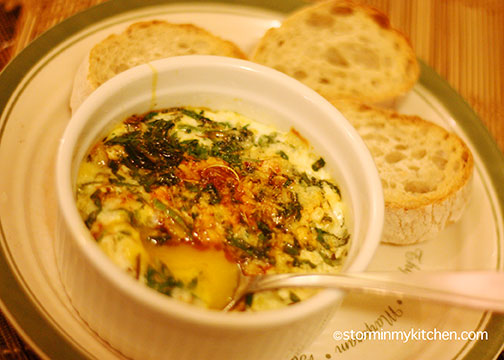
Baked Eggs with Rosemary, Garlic and Parmesan
(A recipe from the Food Channel)
You Will Need:
- ¼ teaspoon fresh garlic, minced
- ¼ teaspoon fresh thyme leaves, minced
- ¼ teaspoon fresh rosemary, minced
- 1 tablespoon fresh parsley, minced
- 1 tablespoon fresh parmesan cheese, grated
- 4 large eggs
- 1/8 cup heavy cream
- 1 tablespoon unsalted butter
- Salt
- Coarsely ground pepper
- Toasted bread
What You Do:
- Preheat broiler for 5 minutes and place the oven rack 6 inches below the heat.
- Combine garlic, herbs, & Parmesan cheese in a small bowl. Set aside.
- Carefully crack 2 eggs into small bowls, making sure that the yolk is intact.
- Place 2 individual ramekins on a baking sheet.
- Place 1 tablespoon of cream and ½ teaspoon of butter in each dish and place under the broiler for about 3 minutes, until hot and bubbly.
- Quickly pour 2 eggs into each ramekin and sprinkle evenly with the herb mixture. Season with salt and pepper.
- Place back under the broiler for 5-6 minutes or until white of the eggs are almost cooked. The eggs will continue to cook after it is taken out of the oven.
- Cool for a minute and serve hot with toasted bread.
I had this for lunch, but it can be a great kick-start to the day. If fresh herbs are a problem, dried herbs work well too. Reduce them to at least half the amount and you will also get wonderful results.

My take on this persisting debate: Eggs are an important source of high quality protein, it is packed with essential nutrients, and a good source of omega 3. The highest source of protein is in the yolk, they say. I say the highest source of flavor is in the yolk. So missing out on the yolk means missing out on the best benefits this tiny piece of heaven has to offer. And besides, egg whites are really meant for macaroons, yes?
* Source: http://www.cholesterol-and-health.com/Egg_Yolk.html
What To Eat in the Hida Neighborhood: Hida Beef
May 29, 2013 § 1 Comment
Tender, juicy, melt-in-your-mouth goodness – is how I describe this good piece of steak I had in a not so recent dining episode somewhere in Hida Takayama. In fact, most of our meals were of this black-haired Japanese cattle breed.

Our very first meal in Takayama was this wonderful set meal at a French Bistro called Le Midi,
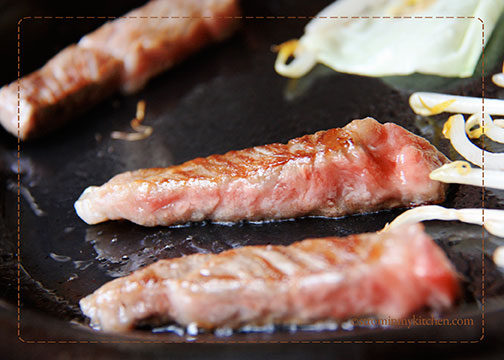
we then had it Teppanyaki style in Hirayu,
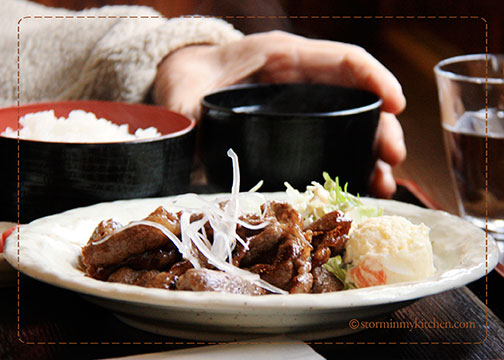
Yakiniku style in a hole in a wall,

in a bun found in stalls everywhere,
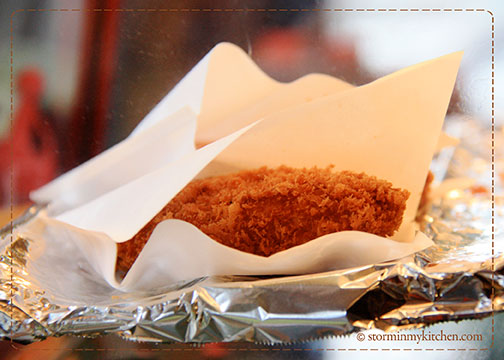
we queued in line to have taste of this minced Hida beef cutlet,
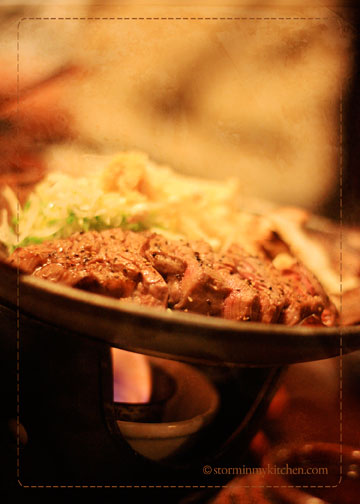
and delighted in the city’s specialty, Hida Beef grilled on a magnolia leaf with Hoba miso (another of their delicacies) – all garnering a truly satisfying two-thumbs up from me.
Raised in the Gifu Prefecture, Hida Beef or Hida-gyu, as it is called, is one of the reasons how I found myself in Hida Takayama. Although widely known (and for obvious reasons) for its wonderfully preserved city and beautiful sceneries, for foodies, it is its premium beef that reigns supreme in this city. Sharing the same class (but not exactly the limelight) as Kobe and Matsuzaka, Hida, like other wagyu beef, has beautiful marbling that prevents the juice and aroma from escaping from the meat and helps maintain its tenderness. The cattle fattened for 14 months, and its meats are ranked from grades 3-5 (with 5 being the most premium).
In my humble opinion, I find that Hida beef boasts of the buttery taste found in some wagyu beef but does not possess so much of the fatty richness, highlighting more the flavor of the meat. If you find your way to Takayama, do splurge on at least a meal of Hida beef. If, however, you start dreaming of Hida Beef, do not hesitate, head out to Takayama at the soonest chance you get.


 Storm In My Kitchen